Reflection: Collections for the people, by the people

“Bad libraries only build collections. Good libraries build services (and a collection is only one of many). Great libraries build communities”, (Lankes, 2012, p. 33). Having almost completed this course I want to expand on this statement – great libraries not only build communities but they are built by communities. Community involvement in the library services, creating the collection, reflecting on the policies and participating in procedures places the ownership of the library right where it should be – in the hands of the people it serves.

Our library serves the staff, students and families of Istanbul International Community School. When we were considering budgeting for a balanced collection we were asked how realistic is it to use output measures e.g. use of resources as a basis for library budgets? I wondered whether instead of measuring resource use we look at the range of people using the resources (Bond, 2014a). Many of our students borrow DVDs for family fun nights. Parents come in and borrow resources for themselves, for younger children not at school yet and to supplement the resources their children borrow.  Our whole school community uses our library collection and they should have a say in its development.

When I was reading about weeding it was suggested to involve colleagues and students in that process (Beilharz, 2006, n.p.). I must admit I cringed. My colleagues can be very critical of getting rid of resources no matter how tatty and irrelevant, and I had never asked students before.  I had the chance to try working with a student that week. Anna age 5 understood our criteria and purpose and made great decisions on the resources (Bond, 2014c). That experience really did show me the value of including the community in collection management.

Consultation is time consuming so it has to be focussed. When we considered collection evaluation and its importance in showing where to place precious funds in order to maximize learning impact  the time factor seemed the biggest barrier (Hughes-Hassell & Mancall, 2005, p.40).  A focussed evaluation of one area can be achieved in limited time. Our International Languages collection, otherwise known as Mother Tongue books, certainly is one area in need of evaluation. Our school has many students who are learning in English language but for whom English is not their first language. Research is showing that the more years of education they have in their first language the better the students are at this language and the target (in our case, English) language (Skutnabb-Kangas & Phillipson, 2009).  Our collection has been built around parent donations. I am only fluent in English language and so I need to consult with our community. I will need to create an evaluation guide for parent or student volunteers (Bond, 2014b) and then we can plan to develop this collection effectively together.

One of the enduring understandings I have from this course is that the collection is vital for the effective support of the teaching and learning in our school community AND the community has to contribute to collection’s vitality. For the people, by the people – this is what makes great library collections and great libraries.


References

Beilharz, R. (2006). Secret library business – part 2. Connections, 63. Retrieved from http://www2.curriculum.edu.au/scis/connections/issue_63/secret_library_business__part_2.html

Bond, A. (2014, April 1). Other techniques for collection measurement [Online forum post]. Retrieved from http://forums.csu.edu.au/perl/forums.pl?forum_id=ETL503_201430_W_D_Sub6_forum

Bond, A. (2014, May 4). Evaluation – making time for learning excellence [Blog post]. Retrieved from Wondering at work website: https://abond.edublogs.org/2014/05/04/evaluation-making-time-for-learning-excellence/

Bond, A. (2014, May 17). A prickly problem [Blog post]. Retrieved from Wondering at work website: https://abond.edublogs.org/2014/05/17/a-prickly-problem/

Hughes-Hassell, S., & Mancall, J. C. (2005). Collection management for youth: responding to the need. Chicago: ALA editions.

Lankes, R. D. (2013). Expect more: Demanding better libraries for today’s complex world. San Bernadino, CA: R. David Lankes.

Skutnabb-Kangas, T., Prof., & Phillipson, R., Prof. (2009, January). The language is the learning (Interview by C. Inugai-Dixon & A. Flory) [Transcript]. Retrieved May 4, 2014, from International Baccalaureate Organisation website: http://www.ibo.org/ibworld/jan09/languageisthelearning.cfm

A prickly problem


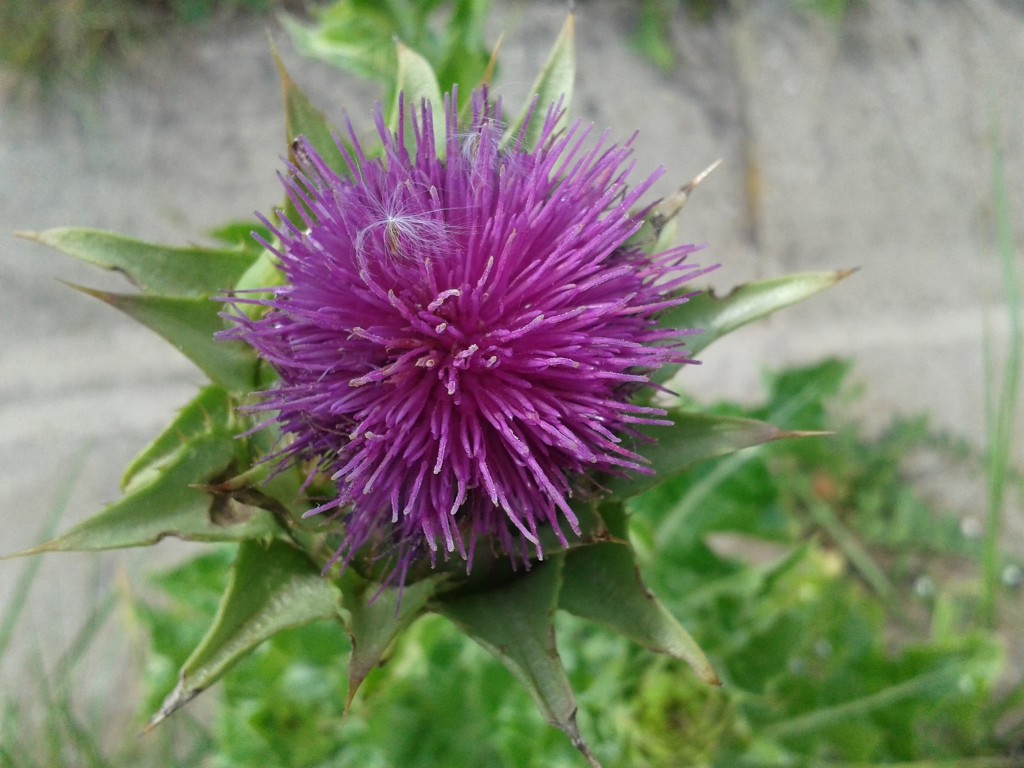
Thistle - photo by A.Bond

Thistle – photo by A.Bond

Last week I posted this photo on Facebook. We have many thistles around our school at the moment and I love their dramatic purple/pink colours. One of my friends commented that these are actually deadly to cows. I am pretty sure she was not suggesting I was a cow, she was simply sharing the information. At the moment I am learning about collection management including how to select books and resources for our collection and of course deselect them – also known as weeding. I realized how conservative I have been in weeding the collection. I think I have been fearful since we are such a distance from sources of books and customs makes it tricky to import them. However, old, musty, dated books are as toxic to our library as purple thistles are to cows.

As I was reading about weeding (now that is fun to say) I found Doug Johnson’s article about it and his comment, “Poorly weeded collections are not the sign of poor budgets but of poor librarianship. Period.” Ouch. That was like coming up against a thistle. But, like so many things, Johnson is right. I have to overcome my fears and get into the collection and get rid of all the weeds. If I don’t my students will not find the great new books we have.

 There are many great guides to how to weed. CREW is a guide from Texas and is downloadable. Then there is the guide from National Library of New Zealand services to schools. Most advice to write a clear collection management policy and set the selection and deselection criteria very clearly. The trouble with weeding is that some people in our schools do not want to part with books. Somehow it can be a very controversial thing to remove books from the library collection. The blog “Awful library books” actually shows the terrible books that librarians are removing form their collections. It also gives some great reasons why we need to weed. In the section “Why weed?” they make the valid point that libraries have limited space. The SCIS electronic newsletter ‘connections’ article about weeding makes the valid point that students actually need materials available ina way that they can easily be found, not crammed together, old and new together.


So yesterday, in the effort to make space at our smallest campus I spent the day weeding the picture books. As I did many children came up to ask what I was doing (as I sat amid piles of old dusty and worn out books). Anna in our Prep class (age 5 years old) sat down beside me and asked if she could help. I told her my criteria for deselecting the books and I handed her an old musty book and asked her what should I do with this? She looked through the book carefully while telling me’ “I haven’t seen anyone look at this book”. After looking at the date due slip, noting the browned pages and ripped spine she said no we shouldn’t re-shelf this book, put it on the pile. Together we worked through about 20 books. Some of the nice looking books we stopped and considered the copyright date (information she grasped quickly and consulted on a few other books). Unfortunately for me Anna had to go to another class and I was left on my own to ransack the picture books.


That day 580 books were removed from our collection. Don’t despair I reordered the tattered favourites and classics. The shelves now show the beautiful new books we have. Children came in and loved browsing the shelves. I have grown stronger in my professionalism as a librarian and yes, though I like the purple thistles they really can be toxic to students use of the collection. I will return and finish the job on the whole collection.

References

Beilharz, R. (2006). Secret library business – part 2. Connections63. Retrieved from http://www2.curriculum.edu.au/scis/connections/issue_63/secret_library_business__part_2.html

Johnson, D. (2003, September). Weed. Retrieved May 17, 2014, from Doug Johnson website: http://www.doug-johnson.com/dougwri/weed.html

Kelly, M., & Hibner, H. (2013). Why we weed. Retrieved May 17, 2014, from Awful Library Books website: http://awfullibrarybooks.net/why-weed/

Larsen, J. (Ed.). (2008). CREW resources and links. Retrieved May 17, 2014, from Texas State Library and Archives Commission website: https://www.tsl.texas.gov/ld/pubs/crew/index.html

Services to schools weeding guide. (n.d.). Retrieved May 17, 2014, from National Library of New Zealand website: http://schools.natlib.govt.nz/school-libraries/building-and-managing-collection/weeding-guide

Once upon an old, ‘mustie’ book… weeding the folklore, traditional tales section

The area I have decided to focus on for the weeding exercie is the one I am most cautious with – the 398 section, folklore and traditional tales. I am always overly cautious when weeding this section because as an International school I am aware that we should have folktales from as many areas of the globe as possible.  As I have been reading and learning about deselection I realize that knowing why we need to do this, having very clear criteria to follow and involving the school community  all contribute to successful weeding (Beilharz, 2007). The CREW manual recommends to keep these works indefinitely (Larson, 2012, p.68) but to check each title using the MUSTIE criteria. However, understanding that while the tales do not date the illustrations, forewords and presentation may date and show bias or lack of consideration that is expected in today’s schools (Baumbach & Miller, 2006, p.72).  

Before the process begins it would be very important to take a close look at our school community in terms of country of origin. While I looking at this part of the collection I should make note of the countries and regions where the folktales are from. I would then see if we had representation of our student’s home countries and of our host nation, Turkey.  Our grade 3 students take part in a Unit of Inquiry about traditional tales and I could enlist their help in deselecting books which are not helpful to their studies or enjoyment

References

Baumbach, Donna J.; Miller, Linda L. (2006). Less Is More : A Practical guide to Weeding School Library Collections. Retrieved from http://www.eblib.com

Beilharz, R. (2007). ‘Secret library business – part 2′, Connections, Issue 63, pp. 10-12. Retrieved

from http://www2.curriculum.edu.au/scis/connections/issue_63/secret_library_business__part_2.html 

Larson, J. (2012). CREW : a weeding manual for modern libraries. Austin, TX: Texas State Library and Archives.

Evaluation – making time for learning excellence

All teacher librarians, whether they are working in a team or solo, have many demands on their time and resources. At all times we need to decide what to give our attention to and make that decision in the light of what will most benefit the student learning in our libraries and schools (Karabush & Pleviak, 2011, p.49). A collection evaluation may seem like one of the tasks that should be put off simply because it is time consuming and can seem removed from the teaching and learning focus.

Yet a collection evaluation can make an invaluable contribution to the teaching and learning goals of the school through evaluation of resources and effective use of budget money. A collection evaluation shows clearly where a collection is in deficit and in need of development. It can show where to place precious funds in order to maximize learning impact (Hughes-Hassell & Mancall, 2005, p.40). The collection strengths and weaknesses should be evaluated against library standards and educational goals and mission of the school.
An evaluation can be conducted on on a particular area of the collection rather than the whole collection. This way the teacher librarian can concentrate on particular focus points each year as part of the overall library planning and goal setting. Once an area has been identified as a focus teachers, students and volunteers can participate in the evaluation process. Also as part of the annual library plan time, resources and possible methods can be allocated to the evaluation process. The area of the collection under scrutiny will dictate the methods chosen for the evaluation.
Two areas on our collection spring to mind when reading about evaluation. The hardest one for me is the International Languages Collection (known as Mother Tongue resources in International Baccalaureate schools). Our school has many students who are learning in English language but for whom English is not their first language. research is showing that the more years of education in first language the better the students are at their own language and the target (in our case, English) language (Skutnabb-Kangas & Phillipson, 2009).  We have been developing our Mother Tongue collection throughout the time I have been at the school but in a haphazard way of simply receiving donations from generous families who are moving overseas. I need to try to evaluate this part of our collection and then work on a plan to purchase high quality resources. I cannot complete this evaluation on my own as I am only fluent in English language. I will need to create an evaluation guide for parent or student volunteers.
The other area is the 500’s section of the PYP nonfiction. Our primary years Programme units of inquiry are developing towards more units on caring for the planet and including \resources about endangered animals, habitats and plants from Pre School level through to grade 4. One way I will do this is to look at the final programme of inquiry units for next year and see which grades focus on topics that will include resources from the 500’s. I will then evaluate the precise areas of the 500s to look into and the grade levels needing support, looking at reading age and possible activities in particular. I will use a Titlewave analysis as we use Follett Destiny as our library management system. Thorugh this I can evaluate specific areas of the collection strengths and weaknesses in terms of age, use and recommended titles. I will then create a buying plan which would involve asking teachers and students to contribute possible titles and topics to focus on.
By identifying key areas of the collection to evaluate and develop then adding these as goals in the library plan for the academic year it is more likely that the precious resources of time and staff attention will be given to this activity.
References
Hughes-Hassell, S., & Mancall, J. C. (2005). Collection management for youth: 
     responding to the need. Chicago: ALA editions
Karabush, C., & Pleviak, P. (2011). Talk me off the ledge:surviving solo 
     librarianship. Knowledge Quest40(2), 48-53.
Skutnabb-Kangas, T., Prof., & Phillipson, R., Prof. (2009, January). The 
     language is the learning (Interview by C. Inugai-Dixon & A. Flory) 
     [Transcript]. Retrieved May 4, 2014, from International Baccalaureate 
     Organisation website: http://www.ibo.org/ibworld/jan09/ 
     languageisthelearning.cfm
TitleWise collection analysis. (2014). Retrieved May 4, 2014, from Follett 
     Titlewave website: http://www.flr.follett.com/main/ 
     titlewise?SID=6d9b1c286884f0db867f7f2736b195b6

e-book issues

Oh the agony and ecstasy of ebooks. They seem to be the answer for all our problems with supply of English books in a country which has strict customs controls. The chapter, ‘Acquiring E-books’ in Polanka, S. (2009). No shelf required : E-books in libraries, is a very comprehensive guide to the issues around e-books. I can add a few thoughts having launched our ebook collection three years ago.

I wanted to use ebooks but without purchasing the devices on which to read them. As far as I could see if you have a kindle with 50 titles on it the minute the student takes it out they not only have the device and the book they are reading on it – they also have 49 other books no one else has access to for the time they have the device. I looked for products and systems which allowed students access 24/7 and from any computer or tablet regardless of operating system.

This has been successful for the most part with the acknowledged frustration from kindle and nook users (I am one myself) that our ebooks are unavailable to them on the ereader devices. Almost all of these people also have laptops, tablets or smart phones so the problem is minimal and as they are avid readers I have found they overcome it willingly.

We started with Tumblebooks a Canadian company. We subscribe to the full Tumblebook collection which includes animated books, audio books, books in which the text lights up as it is being read and ebooks. This collection is growing every month. The company sends newsletters outlining new titles, new upgrades and requesting user input as to which title to acquire next. Most recently they have been expanding their nonfiction collection and have included short films from National Geographic among other education providers. Initially it was extensively used by our lower primary as an integral part of the daily 5 . More recently we have the high school English department accessing it for the Shakespearean plays and for the Orca books (high interest, low level vocab books for reluctant or ESOL readers). Our French and Spanish departments also use it for resources for their students.

Over the past six weeks we have been trialing Storybox  an Australian company which has a very different approach to ebooks to Tumblebooks. The upper primary students have welcomed the contrast to Tumblebooks and we will take out a subscription next year as a point of difference. This company is very responsive. This is another example of a subscription collection so we do not select the books but rely on what is provided.

Two years ago I began to select ebooks through Follett. Our library management system is Follett Destiny. As we use this we get the interface for the ebooks free of charge (unlike overdrive in which you purchase the interface and then the books). These books are lent to our patrons for two week loan periods through any computer device. I have been trying to select nonfiction books with unlimited access which allows for as many users as we have to access the book at once. These books are more expensive and not every book has this option. All other ebooks we purchase have one user at one time.

Some unexpected ‘problems’ with our ebook collection through Follett have been – some ebooks are unavailable for sale outside of USA and Canada. This is a source of immense frustration. Not every book is available as an ebook – which surprises so many of my colleagues. I have yet to find a good way to differentiate age suitability on the catalogue. We can only add Follett titlewave sourced books on to the Follett system.

Some wonderful benefits of the ebooks. Once I have sent the order in the books arrive available for loan within days. We can add to the catalogue records. The books can be reviewed, recommended and placed on virtual shelves of our patrons like any other book. The books are returned to the library on time – if a student loses the device they are reading it on we still get the book back.

We have just stretched our budget to ebrary through Proquest. We purchased the full collection with unlimited access mostly to avoid the hidden costs of being charged for each use of a book. We have had it for four weeks and already students in the senior high school have found it invaluable as a resource for their extended essays and personal research.

So we have a combination of subscription based and selected ebooks available to our school community. The subscription based books all offer the school something I cannot accomplish alone. Usually the ebooks are enhanced in some way – like Tumblebooks and Storybox. The ebrary books are mostly academic texts and so highly specialized I would not think to purchase them because only a few students would use them.  The fact that the specialization is made possible through this collection is its appeal.  Each year our senior students do in depth academic research on topics that interest them. Ebrary resources these studies very effectively. Then by building our own collection of ebooks I can resource the other areas of the collection that may not be covered so well – middle school students, professional development, nonfiction on topics that are highly sort after.

I find myself delighted and frustrated by ebooks in almost equal parts. Publishing companies will need to climb out of their silos I think the ebook readers’ bill of rights created by Sarah Houghton best reflects my views on ebooks. I finish this reflection with her rights. Please do go to her blog “Librarian in Black” and retweet these and share them.

Every eBook user should have the following rights:

the right to use eBooks under guidelines that favor access over proprietary limitations
the right to access eBooks on any technological platform, including the hardware and software the user chooses
the right to annotate, quote passages, print, and share eBook content within the spirit of fair use and copyright
the right of the first-sale doctrine extended to digital content, allowing the eBook owner the right to retain, archive, share, and re-sell purchased eBooks


References

Daily 5 (n.d.). Retrieved April 23, 2014, from http://www.thedailycafe.com/public/department104.cfm

Ebrary. (n.d.). Retrieved April 23, 2014, from http://www.ebrary.com/corp/

Follett eBooks. (n.d.). Retrieved April 23, 2014, from http://www.aboutfollettebooks.com/

Librarian in Black Blog – Sarah Houghton. (n.d.). Retrieved April 23, 2014, from http://librarianinblack.net/librarianinblack/2011/02/ebookrights.html

Morris, C. and Sibert, L. Chapter 6, ‘Acquiring E-books‘ in Polanka, S. (2009). No shelf required : E-books in libraries, ALA : Chicago, pp. 95-124

Story Box Library – an Australian online storytelling resource featuring popular authors, illustrators, teachers’ notes and activities for students and families – Home. (n.d.). Retrieved April 23, 2014, from http://www.storyboxlibrary.com.au/

Tumblebooks -Read Watch Learn! (n.d.). Retrieved April 23, 2014, from http://www.tumblebooks.com/

Annotated resource list: United Nations resources for grade 5

Part B: Annotated Resource List

1. Cyberschoolbus. (n.d.). Retrieved April 05, 2014, from United Nations – global teaching and learning project website: http://www.un.org/Pubs/CyberSchoolBus/index.shtml


Found using Diigo.com as a selection aid this website has been created by the UN with the specific purpose of informing students about its functions. There is a lot of content but it is well organised and easy to navigate (“Great websites for kids,” 1997).  The UN intro tab is the place our students would begin. This area has 6 pages. The text is laid out like a textbook and it has a secondary school reading level so would be accessible to the better readers in grade 5. Unfortunately there are no hyperlinks or bold key words within the text so specific terms, agencies and vocabulary are not easily identified. On the final page of this tab there is an organisational chart showing the six main areas of the UN. This chart is hyperlinked but to the main UN website. This link does provide further links to UN agencies so would provide rich information for ‘going further’ in the inquiry though requires an advanced reading level.


2. Everything you always wanted to know about the United Nations: For students at Intermediate and Secondary levels (PDF). (2008). United Nations Department of Public Information. Retrieved from https://unp.un.org/Details.aspx?pid=20920


Found using Diigo.com as a selection aid, published by the UN this booklet has obvious authority and accuracy. There are no preview options with this resource so it is difficult to assess the treatment of the subject, organisation or literary merit. It is 68 pages in length and is a downloadable PDF. Without the ability to preview the resource it is difficult to apply many of the selection criteria (Hughes-Hassell & Mancall, 2005, p.44). Described as a “great tool for introducing children to the United Nations” (“Product details,” n.d.) it is clearly aimed at Intermediate level students and seems to offer the overview about the UN that our students will need. The text is also described as “easy to read” (“Product details,” n.d.) which would be helpful for our reading at lower lexile levels. This booklet is available for download or online in 9 languages three of which would be useful to our grade 5 students.


3. United Nations at a glance (PDF). (2012). United Nations Department of Public Information. Retrieved from https://unp.un.org/Details.aspx?pid=23093


Found using Diigo.com as a selection aid search, Diigo was a surprisingly useful selection aid, though more of a location aid providing links to these specific UN created resources (“Diigo Search Titles, Tags,” n.d.). Published by the UN this booklet has obvious authority and accuracy. There are no preview options with this resource so it is difficult to assess the treatment of the subject, organisation or literary merit. It is 224 pages in length and is a downloadable PDF. (Hughes-Hassell & Mancall, 2005, p.44). Described as “a starting point for readers who are new to the UN, in clear language this book explains what the UN does, how the UN does it…” (“Product details,” n.d.) This would definitely provide information for the first stages of the inquiry unit. One aspect that appeals with this resource is that it includes “definitions of frequently used terms” (“Product details,” n.d.) which would be invaluable to our students. This would also provide useful information for the later ‘going further’ stages of the inquiry. It appears to only be available in English.


4. The United Nations: It’s your world. (2008, November 6). Podcast retrieved from http://www.youtube.com/watch?v=bHmXZXsABm0


Found on the UN publications website this resource is created by the UN so provides reassurance as to accuracy and authority (Hughes-Hassell & Mancall, 2005, p.44). This podcast is also available on loan in DVD format through the Brussels regional office free of charge to educational institutions for Western Europe countries only. The UN regional office in Ankara, Turkey may be able to help get a DVD copy of this resource. The narration is clear though it does cover a lot of material in a short time – 7 minutes. The footage shows scenes from the origins of the UN through to modern day with an emphasis on children. The narrative begins with showing disaster relief then chops back to the origins and purpose of the UN. It covers many of the agencies and function of the UN. It is available in 5 languages all of which would help grade 5 students. There is no specific accompanying resource material. All criteria specific for DVD evaluation was found in Evaluation and selection of learning resources: a guide which was very useful (Prince Edward Island Department of Education, 2008, p.32).


5. Bookmiller, K.N. (2008) Global organisations: The United Nations. New York, NY: Chelsea House.


This is available in print and as a Follett e-Book with unlimited access which means many students can download simultaneously. Found using a Follett Titlewave search under the subject heading United Nations. Titlewave is linked to our Follett catalogue and it will show if we have that specific title or one like it in our collection already. As it is an eBook it is able to be previewed. The chapters cover the origins of the UN, how it works and key areas of responsibility. The language is at secondary level so would be for more able readers in grade 5. The final chapter is “The UN: Its predicaments and promise” which shows the coverage is balanced in treatment. Titlewave includes reviews from Journals in its book records when available this book has been highly recommended as “a must purchase for school libraries” (Yutzey, 2009, p. 91). The added appeal of this resource is that it can be purchased and added to our eBook collection in a matter of days.


6. Von Warburg, A. S. (Producer). (2007, July 11). United Nations for kids. Podcast. Retrieved from http://youtu.be/ObaMsumuR29Q


Sourced from the Watchknowlearn.org database found through the Diigo search this video is in two parts. The first part deals clearly with the origin and six key areas of the UN. The second part explains the Millennium Goals. A mix of animation, still photograph and video footage this provides a simple overview of the UN. The narrator speaks clearly with an accent which will not be an issue for our students. The information given is concise and the films are short – 7 minutes long. There are good subtitles which give visual support to the spoken information, all of which are important selection criteria for DVDs (Prince Edward Island Department of Education, 2008, p. 32). It was given 5/5 stars on the Watchknowlearn website (“United Nations,” n.d.) and was viewed more than 1000 times. Watchknowlearn is a website run by teachers and educational professionals who invite teachers to suggest videos for inclusion to their directory.


7. MacQueen, N. (2010). The United Nations: a beginner’s guide.  London: Oneworld.


Found using Follett Titlewave subject search this book is listed as having an interest level of young adult (YA) which would make the content accessible by our better readers in grade 5. Norrie MacQueen is senior lecturer in International relations at the University of Dundee and has written several books about the work of the UN (Oneworld, n.d). From the description given in Titlewave the book “provides information on its [UN] structure, purpose, key personalities, major resolutions, peace keeping record and impact on the world,”  (“Titlewave Search – United,” n.d.). While the reading level is a little advanced the author has authority and credibility in this field and the book is a recent publication. Without any preview options it is difficult to apply selection criteria such as treatment of the material, arrangement and organisation and literary merit to the book and there are no reviews on Titlewave for it (Hughes-Hassell & Mancall, 2005, p.44). Despite this it has been selected for the list over other titles discovered through the Titlewave search which had negative reviews or were too advanced in reading age (“Titlewave Search – United,” n.d.).


8. Connolly, S. (2009). The United Nations. Collingwood, ON: Saunders Book Company.


Found using Titlewave subject search this book has an interest level of grades 5 – 8. The Titlewave entry includes a review from Library Media Connection by a Media Specialist from Ohio explaining that this book has a glossary which would be very useful for our students. She does go on to warn that the text can be hard to follow due to the amount of boxed information and pictures included on every page (Legg, 2009, p.93). Despite this it offers information on the birth of the UN and its structure. One thing that would also add to its value is that the Titlewave description includes that it has “views of those who support or criticise the UN,” (“Titlewave Search – United,” n.d).  This provides useful balance in the opinions about the organisation and helps address any political bias that may be in resources solely sourced from the UN itself as pointed out in selection criteria (Prince Edward Island Department of Education, 2009, p. 29). This selection criterion was formulated for selecting learning resources and is very helpful due to the detail it provides.


9. United States history: History and functions of the United Nations [DVD]. (2010). USA: Cerebellum Corporation.


Found through a Titlewave subject search this resource is listed as having an interest level of grade 5- 8. The narrator is Tru Hawkins and the DVD was originally produced in 1996. In the description in Titlewave the DVD traces the development of the UN as an organisation from its origins through its many aims and activities (“Titlewave Search – United,” n.d.).   It is 30 minutes in length and unfortunately there are no reviews on Titlewave or on Amazon. The appeal of this resource is that it is a DVD as opposed to a resource on YouTube, with the present Turkish government ban on YouTube having a DVD resource would be beneficial. The length of the DVD would suggest that it does go into more detail than the other video resources in the list. Without reviews or a preview option it is not possible to measure this resource against selection criteria. The title does suggest there would be a bias toward the United States involvement with the UN. This is why it is low on the selection list.


10. Sasek, M. (1968).  This is the United Nations. London: W. H. Allen.


Located using Library Thing, (“Library Thing Works Search,” n.d.) this book is no longer in print though used copies are available through Amazon.com from $39.84. The work of this author is much admired and this book was published in the series of books “This is…” exploring major cities of the world and some countries as well. These books are now being republished through Universal publishing company. This book on the United Nations was on the International Board for Young People Honour List in 1979 (Horvat, 2013). This writer/illustrator is much admired and his iconic books are still accessible for children today though the text may be “a little old fashioned,” (Horvat, 2013).  This is not a ‘must have’ resource for this unit but it offers a point of difference to the other resources and adds some enjoyment and exploration for visual learners. A review by Griselda Barton in Children: more than just a pretty faceThe Times Saturday Review, June 22 1968 explained that the book is “delightfully illustrated and highly informative,” (“This Is the United,” 2003) which suggests it has some value as an information resource.

References

Bookmiller, K. N. (2008). Global organisations: the United Nations. New York, NY: Chelsea House.

Connolly, S. (2009). The United Nations. Collingwood, ON: Saunders Book Company.

Cyberschoolbus. (n.d.). Retrieved April 6, 2014, from United Nations – global teaching and learning project website: http://www.un.org/Pubs/CyberSchoolBus/index.shtml

Diigo search titles, tags, annotations and urls – United Nations. (n.d.). Retrieved April 6, 2014, from https://www.diigo.com/search?what=United+Nations&adSScope=community

Everything you always wanted to know about the United Nations: For Students at Intermediate and Secondary levels (PDF). (2008). United Nations Department of Public Information. Retrieved from https://unp.un.org/Details.aspx?pid=20920

Great web sites for kids selection criteria. (1997). Retrieved April 6, 2014, from Association for library service to children website: http://www.ala.org/alsc/greatwebsites/greatwebsitesforkids/greatwebsites

Horvat, R. (2013, November 16). This is Miroslav Sasek [Blog post]. Retrieved from If it happened yesterday, its History website: http://roberthorvat30.wordpress.com/2013/11/16/this-is-miroslav-sasek-2/

Hughes-Hassell, Sandra; Mancall, Jacqueline C. (2005). Collection management for youth: Responding to the needs of learners. Retrieved from http://www.eblib.com

Legg, H. (2009). Greenpeace./The International Red Cross./The United Nations./The World Health Organisation. Library Media Connection, 27(6), 93.

Library Thing works search: United Nations. (n.d.). Retrieved April 6, 2014, from https://www.librarything.com/search.php

MacQueen, N. (2010). The United Nations: a beginner’s guide. London: Oneworld.

Prince Edward Island Department of Education. (2008) Evaluation and selection of learning resources: a guide. Prince Edward Island. Department of Education. Retrieved from http://www.gov.pe.ca/photos/original/ed_ESLR_08.pdf

Product details. (n.d.). Retrieved April 6, 2014, from United Nations Publications website: https://unp.un.org/Details.aspx?pid=20920

Sasek, M. (1968). This is the United Nations. London: W. H. Allen.

This is the United Nations. (2003). Retrieved April 6, 2014, from This is Miroslav Sasek website: http://www.miroslavsasek.com/books/thisis/un.html

Titlewave search – United Nations. (n.d.). Retrieved April 6, 2014, from http://www.titlewave.com/search?SID=b21f44e330c5fcc442a8f41d5d1b3a97#I2

United Nations. (n.d.). Retrieved April 6, 2014, from http://www.watchknowlearn.org/Category.aspx?CategoryID=1143

The United Nations: It’s your world. (2008, November 6). Podcast retrieved from http://www.youtube.com/watch?v=bHmXZXsABm0

United States history: History and functions of the United Nations [DVD]. (2010). USA: Cerebellum Corporation.

Video and DVD catalogue. (n.d.). Retrieved April 6, 2014, from United Nations regional information centre for Western Europe website: http://www.unric.org/en/unric-library/12#history

Von Warburg, A. S. (Producer). (2007, July 11). United Nations for kids. Podcast retrieved from http://youtu.be/ObaMsumuR29Q

Yutzey, S. D. (2009). Global organisations. Library Media Connection, 27(4), 91.


Censorship, differentiation – same same or not?

I work in a k-12 International School. Our students age range is from 3 – 19 years. We have one library for our main campus which is k – 12. Our library collection is highly differentiated. we have 6 different areas for fiction from board books through to adult fiction.

A couple of years ago I purchased an award winning book for the Young Adult fiction section based on a review I had read. We do not have English language bookshops near us and this title was not one that was sources in country. Like most of our resources I purchased it sight unseen. The book is ‘Nothing’ by Janne Teller. It has an amazing history – commissioned by the Danish education authority to write the book Teller completed it in 200 and it won awards in Denmark. Here is my personal (as opposed to CSU) blog post about the book and my response to it.

This book is dark. It is on a par with ‘Lord of the Flies’ by William Golding but in some ways is more extreme. I read the book and instantly wondered if it was in the right collection. The Young Adult collection is read by grades 5 – 8. My concern was that a fifth grader might pick it up. I decided not to change it on my own thoughts so I gave it to our Deputy Principal and a trusted senior student to read. Their reactions – like me they couldn’t put the book down. Like me they felt it belonged in the in the adult fiction section. We all agreed that the subject matter and the resolution of it at the end of the book was adult in nature and therefore not suitable for an elementary school student to read.

This is a very long explanation for my question. I am asking myself this as much as you my classmates: By placing certain books in certain parts of our collection am I censoring them? Teller’s book is still available to our school community to read. Yet – if a fifth grade student was borrowing a book from the adult fiction collection we would look at it carefully and think about whether the student could handle the content. When I look at the definition which started this part of the module, ” Censorship is the conscious effort of an individual, group or government agency … to prevent access to whatever is available to be read, seen or heard.” The ALA World encyclopaedia of library and information services (1980, p.124) I think I have been a censor.

Yet do we not have a responsibility to place the most appropriate resources at the right place for our students? We also have a growing DVD collection. We use colour codes and censorship ratings on the spines of the movies to help students select age appropriate materials and we do not lend out material that is not age appropriate. A few years back we had an irate parent come in with the movie ‘Love Actually’ demanding that we remove it from the collection because of tits explicit nature. Very calmly I showed her that on the cover there is a censorship rating which we follow. She was the one who borrowed the DVD not her children. Our collection is used bu the whole family. She was most relieved when I explained our policy of not lending DVD’s to children unless it was age appropriate. How do we know this? We follow a censorship rating.

So there seem to be times when it is appropriate to censor material for our students – such as not allowing young children access to adult content DVD’s. This is for their protection. I think this issue of censorship is not as black and white as we imagine. I am wondering where the idea of values and morals and ethics come into it. Why are we comfortable about censoring visual media but not print?

I fear I have made myself out to be thought police kind of librarian. Believe me I am not. I work hard to try to be self aware enough not to allow my own prejudices to get in the way of balanced collection development. I defend the child’s right to read what they want to read. I also say to them it is okay not to finish a book if you get bored with it or if it offends or worries you. My own child abandoned an award winning book a few years ago because it had too much swearing in it. That book was returned to the shelves for other children to read and enjoy.

I wrote this to the class forum hoping to spark some discussion…

Content curating – so many ways

Website content curation is something I have always wanted to explore but it seems so daunting at times. One of the librarians I follow is Joyce Valenza. She has such detailed libguides which she makes freely available through her library website.

One I think is of most value to us in our Masters studies is her Masters course libguide found at:

http://libraryschool.libguidescms.com/content.php?pid=324183&sid=2771792#

She is using present.me to make video slide shows about the topics she is lecturing. I viewed the one on curation tools. She also has the TL libguides for all TL’s to use TLguides http://libraryschool.libguidescms.com/friendly.php?s=tlguides


What I didn’t realise is that I am already in some way curating content. As I watched Valenza’s webcast I saw two methods I use now and which are very easy to maintain. I use Diigo as an online bookmarking tool. My library is https://www.diigo.com/user/librarybond We have also used Diigo with our high school speech and debate team and in the various committee I participate in Academic Integrity  is one of them. I like Diigo because you can add a tool to your web browser and simply click on it when you want to add something to your library. I have my Diigo account syncing with me Delicious account as well.


My newspaper - librarybond

My newspaper – librarybond

I also use twitter and while I found it a great tool for following people I found all the tweets overwhelming at times until I discovered paperli. I have my own newspaper librarybond using the tweets I receive. It is emailed to me each morning and other people can subscribe to it as well. I read the headlines as you do with any newspaper and select the best, most interesting articles to pass on to colleagues or to add to my Diigo library.

When looking for other curation sites I found this article

http://www.prdaily.com/Main/Articles/15_topnotch_content_curation_tools_15378.aspx 15 tools for curation.


The one I think I will play with for school is livebinders. I like the idea of the tabs so if I made a livebinder for History at IICS for example I could organise the different subject areas by using the tabs.Here is an example of the livebinder for apple i-pad http://www.livebinders.com/play/play?id=26195  Though it does look time consuming. I like the idea of Scoop.it for quick and easy curation. I will try both tools and see which one I like the best. Here is an example of a 21st century libraries scoop from Dr. Steve Matthews. http://www.scoop.it/t/21st-century-libraries

References

15 top-notch content curation tools. (n.d.). Retrieved March 15, 2014, from http://www.prdaily.com/Main/Articles/15_topnotch_content_curation_tools_15378.aspx

Bond, A. Diigo library – Librarybond. (n.d.) Retrieved March 15, 2014 from https://www.diigo.com/user/librarybond

Bond, A. Librarybond – paperli. (n.d.) Retrieved March 15, 2014  from https://paper.li/kiwionthego/1308979532

IPads in Schools – LiveBinder. (n.d.). Retrieved March 15, 2014, from http://www.livebinders.com/play/play?id=26195

Matthews, S. Dr.,21st Century libraries – Scoop – it (n.d) Retrieved March 15 from http://www.scoop.it/t/21st-century-libraries

Present.me | Free online video presentation software | Make a slideshow with your powerpoint & web cam. (n.d.). Retrieved March 15, 2014, from http://present.me/

Valenza, J. Dr.  Sandbox and resources for Joyce Valenza’s Mansfield course. (n.d.). Retrieved March 15, 2014, from http://libraryschool.libguidescms.com/content.php?pid=324183&sid=2771792

Valenza, J. Dr. TL Guides. (n.d.). Retrieved March 15, 2014, from http://libraryschool.libguidescms.com/friendly.php?s=tlguides

Resourcing the curriculum – once a year

lib team

The IICS library team 2014.

I am teacher librarian at Istanbul International Community School in Turkey. I have been working here since August 2009 so almost five years now. It is my first experience working in an international school. I came to Turkey having worked all my career in New Zealand secondary schools, most recently as teacher librarian at Takapuna Grammar School.

In Turkey we have very strict customs controls and it is very hard to import classroom materials and books in English language. As a result our school has one ordering period each year – November and one bulk order delivery each year – August. So in my first months in Turkey, while adjusting to  a new school, an expanded library area, running libraries over two campuses, new curriculum, teaching primary and pre-school, living in the largest city in the country – I was asked to order ALL the library books, e-resources and library materials we would need for the following year. It was a daunting task. I started the task by consulting with my colleagues and completing a quick survey of the collection in both libraries.

Since that experience of being thrown in the deep end I developed some methods of wish listing throughout the year so I can at least be responsive to staff and student suggestions. I have convinced the administration to allow me some budget for ‘local purchasing’ so I can purchase throughout the year. We have a better way to consult with staff and students about their needs but it needs to improve and deepen. We have a wonderful librarians’ network here in Istanbul with 30 colleagues from international and Turkish private schools sharing ideas – we all face this situation with ordering and collection development. I have learned so much from our network meetings held three times a year.

I am looking forward to participating in this course as I know it will help me to: evaluate the resources we have in the library right now, develop ways to ensure we have student and staff voice in our purchasing decisions, think carefully about how develop our mother tongue collection so the indigenous writers of each culture are represented, expand our electronic resources. There is so much to learn.