Social networking – beginning INF506

Social Networking
Social networking is about sharing. On social networks people can come together and share ideas, information, stories, photos, videos. Social networking is about people connecting with others through digital tools.

Networking technologies most frequently used

Facebook I try to keep Facebook for my personal life; however, many of my friends are also my colleagues. My timeline is filled with articles about libraries and technology in between friends’ family and travel photos. I post library information on our school Facebook page as it is used by our parents.

Twitter I use Twitter as a professional learning tool, following note worthy colleagues. I discovered Paperli a website takes your twitter feed and turns it into a daily newspaper. I can scan the headlines, read what I am interested in without feeling like I might miss something important. This year I created a current events paperli as a trial for our middle school students.

Diigo I save websites and articles on this bookmarking website daily. We have been using Diigo with our debate teams as a research tool. All members of the team belong to the group and share articles and discuss them through Diigo. Our Professional Learning Community is now using this tool to share websites and articles.

Youtube I have been creating i-movies to showcase visiting authors, battle of the books and aspects of learning in our library. This year I have been using Screencastomatic to show students how to use Noodletools, EBSCO and our online catalogue Destiny.  I post these videos to Youtube.

 Google We are a Google school and use almost the entire Google suite of tools for collaboration and organisation.

Good Reads and LibraryThing Our Istanbul Librarians’ Network has a monthly book chat meeting and we record all the books we chat about on our group page. Our February book chat meeting was held on Google Hangouts due to a snow storm. We recorded it and posted it to the group page. I use Librarything to record all the books I read so I can remember titles when I am recommending books to students.


Learning in INF506
I would like to learn how to harness social network technologies to promote the work of our library. I want to let our community know about the great resources we have in the library and how they can access them. I think social networking is a way to achieve these goals.
Final reflection ETL 505

Access – it’s all about access. The purpose of resource description is to provide users with access to the information that a resource contains (Hider, 2013, p.3).  This is the reason we classify resources in our school libraries now and will continue to do so in the future.

These days our students can access a flood of information on almost any subject through a keyword search on Google. This fast and easy keyword searching is often used in the library catalogue as well but it provides a lot of irrelevant information (Scribner Library, 2015). Classification and resource description provide subject headings. Using a subject search within a catalogue or a database, the student will find fewer resources but those resources will be relevant to the topic of their research (Scribner Library, 2015). The subject search approach is something our students need to learn and utilise in order to discover useful and relevant information.

 Some school libraries have decided to adopt genre and subject headings as a way to organise their resources rather than using Dewey. An example of this can be found in St. Vrain Valley School District, Colorado (Buchter, 2013, p.49). While the library does not use Dewey the librarians have devised a subject heading list that they use to classify their resources so their students can find them. The subject classification utilises assigned, controlled headings (Buchter, 2013, p.51). As other schools discuss this method of resource organisation for their libraries it is important that Teacher Librarians (TLs) understand the implications of such a change in terms of access to resources and information for the students.

It is essential to be accurate in describing resources. Unfortunately in this digital age where catalogue records are easy to download, the skills of cataloguing are often undervalued. Yet a mistake in a record can mean the record and, therefore, the resource becomes irretrievable (Attar, 2006, p.174).  It is clear that, at the very least, a basic understanding of cataloguing is needed by all librarians including TLs. Cataloguing is anything but intuitive, and no matter how intelligent the person cataloguing is, unless they have an understanding of subject headings, classification, the need for correct spelling, word order and punctuation, they will unwittingly deny access to that resource (Attar, 2006, p. 184).  While it is easy to import existing records into school library catalogues, it is still the responsibility of TLs to know their students and to apply location classifications and additional subject headings or notes which will provide access to resources.

Digitisation allows library catalogues to develop and offer federated searches. The students can search physical library resources and the databases on offer in one search. To achieve this level of interoperability the systems will need to “talk to each other” which in turn requires a level of standardisation between them (Hider, 2013, p, 47). The ease of internet searching means that students now expect a “one-stop” approach in their library catalogue. If cataloguers can continue to devise ways to meet user expectations of seamless searches then the future for cataloguing appears to be bright indeed (Hider, 2006, p.164). A large part of the contribution cataloguers can bring to the evolving information age is the methodology of describing resources in such a manner that enables quality information to be accessed.


References

Attar, K. E. (2006). Why appoint professionals? A student cataloguing project. Journal of librarianship and information science, 38(3), 173-185. http://dx.doi.org/10.1177/0961000606066578

Buchter, H. (2013). Dewey vs genre throwdown. Knowledge Quest, 42(2), 48-55. Retrieved from EBSCOhost database. (Accession No. 91761325)

Hider, P. (2007). Information access. In S. Ferguson (Author), Libraries in the twenty-first century: Charting new directions in information services (pp. 145-164) [PDF]. http://dx.doi.org/10.1016/B978-1-876938-43-7.50019-3

Hider, P. (2013). Information resource description: Creating and managing metadata (U.S. ed.). Chicago, Ill.: ALA editions.

Scribner Library. (2015, August 24). Keywords and subject terms [Video file]. Retrieved from https://www.youtube.com/watch?v=aTQbacIha2Q


Universal search = federated search some investigation needed…

I really cringed when I read Philip Hider’s comment that one of the problems with library catalogues is that “they represent only a small proportion of information resources provided by the library.” (2013,  p.45). That accurately describes our library catalogue. We have EBSCOhost and eBrary, Tumblebooks and our own ebooks, as well as Follett’s own webpath express. All are searched separately – all little silos containing only a glimpse of all that we offer.

I love the idea of federated searches within our catalogue system.A one stop and see everything on offer makes a lot of sense to me. Our students and staff are very busy people. The number of extra doors that they have to open to get to collections is a real problem to them. No wonder they turn to Google so quickly.

I really like using the CSU library PRIMO as it gives results for all their resources. I can also filter my searches to ebooks and electronic journals only.

I have not used TROVE before but really liked how clean the website looked and that the results were all boxed into their own categories: Books, Newspapers, Journals and so on. It was easy to use and very easy to understand.

Follett Corporation creates our library catalogue – “Destiny”. We are remote hosted and I remembered that before we broke for the summer vacation they were doing yet another up grade. They were working on their federated search system called “Universal Search”. I have not used it much in the past because it was very clunky – took ages to load and the interface was not very attractive or easy to navigate.

Inspired by my TROVE experience I tried out our own Destiny catalogue Universal search. It is much improved. This is definitely a feature I want to further explore, promote and work with Follett reps to improve. I have found one of my professional goals for the coming academic year.


Hider, P. (2013). Information resource description: Creating and managing
metadata (U.S. ed.). Chicago, Ill.: ALA editions.

ETL402 reflection – conversations and community

Two key words spring to mind as I reflect on my learning during this course –conversations and community.

In my first blog post for this course I recalled my first teaching position and how we taught Humanities using themed units, supported with class sets of 5 different novels, (Bond, 2014). I saw the value of including literature in the curriculum; however, I did understand how to help the students make connections between what they were reading in the novels to the concepts and content of the course. If I had the chance to do this again (and I will be working towards this at my school) I would create opportunities for conversations. As students read and engage with concepts and content, they need opportunities to discuss their understandings with each other and their teachers. This can be done through scaffolded discussions – literature circles, one to one conferencing, blog posts and comments, book trailers and reading journals. One of the roles of the teacher librarian (TL) is in helping students make connections through their reading.

An effective way to help students make connections with what they are reading is to use questioning.  One skill I am developing as a result of the course is that of dialogic reading.  The key to this form of reading aloud is the open-ended questions the teacher is asking, (Bond, 2015). Dialogic teaching is a method of asking questions. Open ended questions bring deeper engagement with the text, further understanding and learning conversations (Leland, Lewison, & Harste, 2013, p.19). Another role of the TL is creating these questions then modelling to colleagues how to use this skill to encourage students to have a dialogue with the books they read.

As students talk about what they are reading they begin to see themselves as being part of a community of readers. This can add to the motivation to read, (Leland, Lewison, & Harste, 2013, p.21). It surprises me is that many of my colleagues are not readers of children’s literature. The “Teachers as Readers” programme was developed in the UK to address this issue. The teachers involved were invited to read children’s literature then meet and discuss what they had read. One of the results was that they had more success at matching readers to texts and texts to readers,  and thus increased the opportunity for children to enjoy reading and join the community of readers. TLs need to encourage the development of communities of readers. We need to read widely ourselves so we can match readers to texts, for students and colleagues alike. A key to a successful readers’ advisory programme is that you know the person you are making recommendations to and that you have read a lot of children’s literature, ( (Maatta, 2009, p. 87).  One way I have found to broaden my knowledge of children’s literature is our Istanbul Librarians’ Book Chat meetings. We bring three books we have read from our collection to share each month. Our conversations broaden our knowledge of children’s literature and encourage us to continue to read from within our own collections.

This course confirmed the importance of literature in the curriculum and challenges me to further develop my role in the creating conversations about reading and story in my school community.

References

Bond, A. (2014, November 16). Literature across the curriculum: Initial thoughts [Blog post]. Retrieved from https://abond.edublogs.org/2014/11/16/literature-across-the-curriculum-initial-thoughts/


Bond, A. (2015, February 1). Forum post 2 Enjoying reading brings great rewards [Online forum post]. Retrieved from CSU forums website: http://forums.csu.edu.au/perl/forums.pl?forum_id=ETL402_201490_W_D_Sub10_forum


Cremin, T., Mottram, M., Bearne, E., & Goodwin, P. (2008). Exploring teachers’ knowledge of children’s literature. Cambridge Journal of Education, 8(4), 449-464. Retrieved from EBSCOhost database. (Accession No. AN 35484024)


Leland, C., Lewison, M., & Harste, J. C. (2013). Teaching children’s literature: It’s critical! New York: Routledge.


Maatta, S. L. (2009). A Few Good Books: Using Contemporary Reader’s Advisory Strategies to Connect Readers with Books. New York, USA: Neal-Schuman.

The future of children’s literature

If we were to believe Neil Postman’s vision of our future with the proliferation of media and multimedia the impact on society will mean that our children will no longer be children but small adults. The barrier that was created by print and literacy in print will disappear. Information is accessible by children regardless of skill in reading (Elwell, 2013). I disagree with this position. While children do have access to many forms of information and entertainment their understanding of it and ability to question it, critically examine it and even relate it to their own worlds is limited due to their intellectual development.  There are groups that are actively working to protect children from the influence of many of these forms of media. An example of this is Common sense media with their parent advisory on movies, television and  books  (“Common Sense Media Top Picks,” n.d.). Parents and teachers are aware of the access children have to all media but are working to help them make choices about selecting things they can relate to, that are age appropriate in terms of learning, development  and world experiences.

I see the future of children’s literature as being multimedia. Take for example the Youtube video of B. J Noval reading from his book entitled The Book with no Pictures (Penguin Kids, 2014). I found this video on Facebook – a friend posted in her timeline. After I watched the video I ordered the book. This book has no pictures but the entertainment value is that adults have to read some of the nonsense it contains. The book plays with the idea of text being read aloud and how text works. The characters become the person reading the book and the people listening and enjoying it. The point is – you still need the text in the first place. Who posted this video to Youtube? Not a teacher, not a member of the audience but the publisher. Publishers are realizing that promotion of books comes through multi media and social media.

Some stories are now what are called born-digital. One example is Inanimate Alice which is being written and animated through the web over a period of time (“Inanimate Alice a digital novel,” n.d.). Children are invited to read text and view the video and illustration online. This website was awarded best website for teaching and learning in 2012 by American Association of School Librarians (“Classroom Resources,” n.d.) What is interesting about this example is that while it is an example of the media that Postman says will erode barriers between adults and children it still follows the definition of children’s literature in that it is created by adults for children (Winch, 2006, p. 398). The intended audience is children. It has supporting teaching materials, badges for the readers, so many multimedia expressions yet it requires children to read and view simultaneously.

 This method of reading may be what Zipe is referring to when he writes about young people reading texts much differently to their teachers (p. 42). Indeed there is quite a discussion continuing in many education circles about multiple literacies and how students today read not only print  Zipes argument is that children are being targeted as consumers in our modern society and what they bring to their reading experiences include their consumerism and worldview as viewers/readers of multimedia (p. 44).  I agree that children are influenced greatly by the world around them, the media and their own experiences. I am interested to learn more about how we as librarians and educators can assist the students we work with develop as readers of all forms of text. The future of children’s literature is rich and challenging involving print and electronic forms.


References

Boyd, B. (2012, October 29). E-Books and Beyond: The Future of Children’s Literature. [Blog post]. Retrieved from Bill Boyd – The Literacy Adviser website: http://literacyadviser.wordpress.com/2012/10/29/e-books-and-beyond-the-future-of-childrens-literature/

Classroom resources. (n.d.). Retrieved November 29, 2014, from http://www.teachersfirst.com/single.cfm?id=12641

Common sense media top picks. (n.d.). Retrieved November 29, 2014, from https://www.commonsensemedia.org/

Elwell, F. (2013). Neil Postman on the Disappearance of Childhood. Retrieved November 17, 2014, from Rogers State Univeristy website: http://www.faculty.rsu.edu/users/f/felwell/www/Theorists/Essays/Postman1.html

Inanimate Alice a digital novel. (n.d.). Retrieved November 23, 2014, from Inanimate Alice website: http://www.inanimatealice.com/index.html

Penguin Kids. (2014, September 30). The Book With No Pictures by B.J. Novak [Video file]. Retrieved from http://www.youtube.com/watch?v=cREyQJO9EPs

Winch, G. (2006). Literacy: Reading, writing, and children’s literature (3rd ed.). South Melbourne: Oxford University Press.

Zipes, J. (2009). Misreading children and the fate of the book. In Relentless progress the reconfiguration of children’s literature, fairy tales, and storytelling (pp. 27-44). London: Routledge.


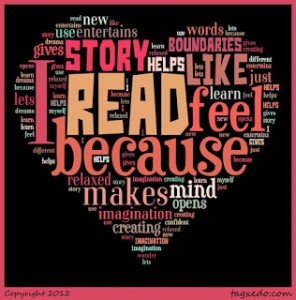
Why read? Richard Peck’s answer that question

I love this poem and have used it often as a prompt when asking students why they love to read.

4O

I Read by Richard Peck

I read because one
 life isn’t enough, and 
in the pages of a book I can be anybody;

I read because the 
words that build 
the story become mine, 
to build my life;

I read not for happy
 endings but for new
 beginnings; I’m just
 beginning myself, and 
I wouldn’t mind a map;

I read because I have
 friends who don’t, and
 young though they are,
 they’re beginning to
 run out of material;

I read because every
 journey begins at 
the library, and it’s
 time for me to start 
packing;

I read because one
 of these days I’m going
 to get out of this
 town, and I’m going to
 go everywhere and meet
 everyone, and I want
 to be ready.”2H I read because

–Richard Peck, author
, Zihuatanejo, Mexico, 
1990 (Peck, 1991, p. 120)

Peck, R. (1991). Anonymously yours. Englewood Cliffs, N.J.: J. Messner.


Literature across the curriculum – initial thoughts

In my first year teaching, many years ago, I worked at Rutherford High School in New Zealand. One of the subjects I taught was called Humanities – that was a posh name for ‘Social Studies’. I particularly loved the curriculum they had then at Rutherford High. Each unit had about four or five novels (with multiple copies of the titles) linked with it. One unit was on Industrialism and there were some great novels linked with it set in Victorian times showing the impact of this phenomena on society through story. The students were expected to read at least one of the associated novels, more if they wanted to. They kept a reading log and were invited to complete a reading response. I found this way of teaching a particular period or concept in the Humanities curriculum very empowering. The students not only had the opportunity to learn facts, skills and concepts linked with Social sciences they had them come alive in their imaginations as they read story. When I saw the title of this course I immediately though of that curriculum and the success I felt it had for my student’s learning.

Many years later I am working in a school that runs all three programmes of the International Baccalaureate.  The Primary Years Programme which is for children age 3 – 12 is Inquiry based and in my role as librarian I bring literature links to the units of Inquiry as well as Information literacy links. Our students come from a range of cultures and backgrounds and many of them have English as their second language. We use picture books and stories to proved links with curriculum. This often also helps students develop vocabulary and concepts around the unit. An example of this is our students in Prep (age 5) were Inquiry into water. We used the story Rain School by James Rumford to show how rain can be destructive in some communities. The story is set in Chad and the children have to make their school from mud bricks. Their first lessons are how to build the school. They then learn how to read and write over the next few months until the end of the school year. Then the rains come and wash away the entire school building. This really captures their imaginations and we begin to use vocabulary like floods, monsoon, and develop some of the degrees of rain as well, showers, deluge and so on.

I am hoping that this course will enable me to understand the value of literature for children’s learning and develop strategies to help my colleagues at Istanbul International Community school to integrate literature in their curriculum areas.

References

Rumford, J. (2010). Rain School. Retrieved November 16, 2014, from James Rumford website: http://jamesrumford.com/jamesrumford.com/Rain_School.html

Rumford, J. (2010). Rain school. Boston: Houghton Mifflin Books for Children.

Reflection: Collections for the people, by the people

“Bad libraries only build collections. Good libraries build services (and a collection is only one of many). Great libraries build communities”, (Lankes, 2012, p. 33). Having almost completed this course I want to expand on this statement – great libraries not only build communities but they are built by communities. Community involvement in the library services, creating the collection, reflecting on the policies and participating in procedures places the ownership of the library right where it should be – in the hands of the people it serves.

Our library serves the staff, students and families of Istanbul International Community School. When we were considering budgeting for a balanced collection we were asked how realistic is it to use output measures e.g. use of resources as a basis for library budgets? I wondered whether instead of measuring resource use we look at the range of people using the resources (Bond, 2014a). Many of our students borrow DVDs for family fun nights. Parents come in and borrow resources for themselves, for younger children not at school yet and to supplement the resources their children borrow.  Our whole school community uses our library collection and they should have a say in its development.

When I was reading about weeding it was suggested to involve colleagues and students in that process (Beilharz, 2006, n.p.). I must admit I cringed. My colleagues can be very critical of getting rid of resources no matter how tatty and irrelevant, and I had never asked students before.  I had the chance to try working with a student that week. Anna age 5 understood our criteria and purpose and made great decisions on the resources (Bond, 2014c). That experience really did show me the value of including the community in collection management.

Consultation is time consuming so it has to be focussed. When we considered collection evaluation and its importance in showing where to place precious funds in order to maximize learning impact  the time factor seemed the biggest barrier (Hughes-Hassell & Mancall, 2005, p.40).  A focussed evaluation of one area can be achieved in limited time. Our International Languages collection, otherwise known as Mother Tongue books, certainly is one area in need of evaluation. Our school has many students who are learning in English language but for whom English is not their first language. Research is showing that the more years of education they have in their first language the better the students are at this language and the target (in our case, English) language (Skutnabb-Kangas & Phillipson, 2009).  Our collection has been built around parent donations. I am only fluent in English language and so I need to consult with our community. I will need to create an evaluation guide for parent or student volunteers (Bond, 2014b) and then we can plan to develop this collection effectively together.

One of the enduring understandings I have from this course is that the collection is vital for the effective support of the teaching and learning in our school community AND the community has to contribute to collection’s vitality. For the people, by the people – this is what makes great library collections and great libraries.


References

Beilharz, R. (2006). Secret library business – part 2. Connections, 63. Retrieved from http://www2.curriculum.edu.au/scis/connections/issue_63/secret_library_business__part_2.html

Bond, A. (2014, April 1). Other techniques for collection measurement [Online forum post]. Retrieved from http://forums.csu.edu.au/perl/forums.pl?forum_id=ETL503_201430_W_D_Sub6_forum

Bond, A. (2014, May 4). Evaluation – making time for learning excellence [Blog post]. Retrieved from Wondering at work website: https://abond.edublogs.org/2014/05/04/evaluation-making-time-for-learning-excellence/

Bond, A. (2014, May 17). A prickly problem [Blog post]. Retrieved from Wondering at work website: https://abond.edublogs.org/2014/05/17/a-prickly-problem/

Hughes-Hassell, S., & Mancall, J. C. (2005). Collection management for youth: responding to the need. Chicago: ALA editions.

Lankes, R. D. (2013). Expect more: Demanding better libraries for today’s complex world. San Bernadino, CA: R. David Lankes.

Skutnabb-Kangas, T., Prof., & Phillipson, R., Prof. (2009, January). The language is the learning (Interview by C. Inugai-Dixon & A. Flory) [Transcript]. Retrieved May 4, 2014, from International Baccalaureate Organisation website: http://www.ibo.org/ibworld/jan09/languageisthelearning.cfm

A prickly problem


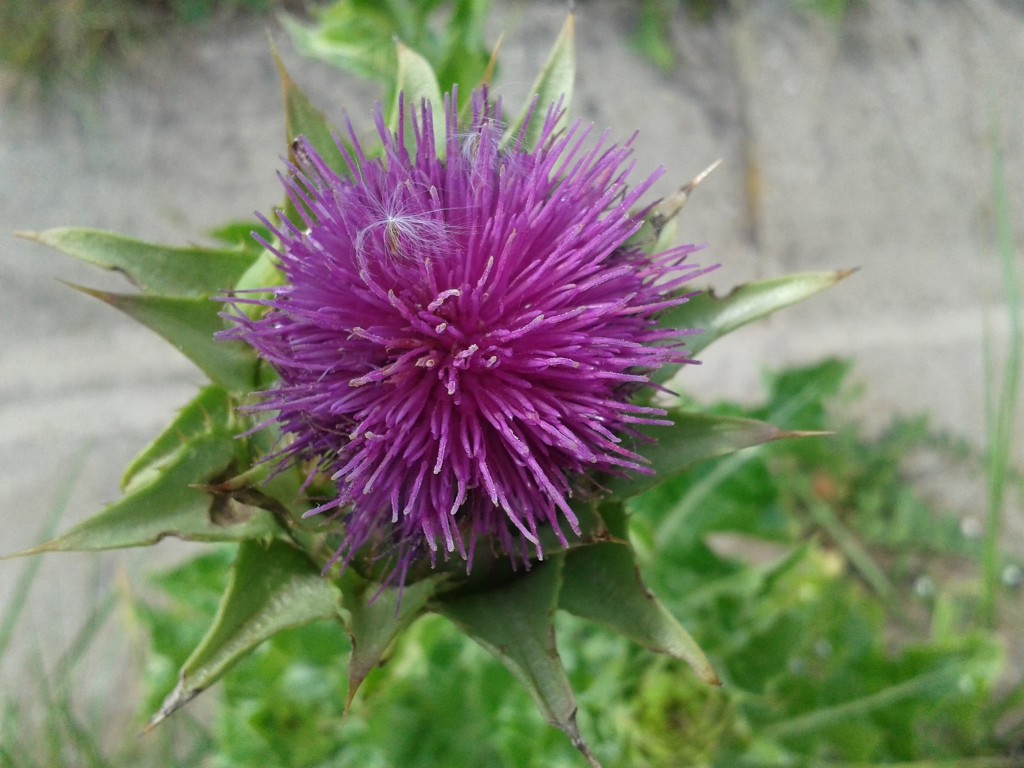
Thistle - photo by A.Bond

Thistle – photo by A.Bond

Last week I posted this photo on Facebook. We have many thistles around our school at the moment and I love their dramatic purple/pink colours. One of my friends commented that these are actually deadly to cows. I am pretty sure she was not suggesting I was a cow, she was simply sharing the information. At the moment I am learning about collection management including how to select books and resources for our collection and of course deselect them – also known as weeding. I realized how conservative I have been in weeding the collection. I think I have been fearful since we are such a distance from sources of books and customs makes it tricky to import them. However, old, musty, dated books are as toxic to our library as purple thistles are to cows.

As I was reading about weeding (now that is fun to say) I found Doug Johnson’s article about it and his comment, “Poorly weeded collections are not the sign of poor budgets but of poor librarianship. Period.” Ouch. That was like coming up against a thistle. But, like so many things, Johnson is right. I have to overcome my fears and get into the collection and get rid of all the weeds. If I don’t my students will not find the great new books we have.

 There are many great guides to how to weed. CREW is a guide from Texas and is downloadable. Then there is the guide from National Library of New Zealand services to schools. Most advice to write a clear collection management policy and set the selection and deselection criteria very clearly. The trouble with weeding is that some people in our schools do not want to part with books. Somehow it can be a very controversial thing to remove books from the library collection. The blog “Awful library books” actually shows the terrible books that librarians are removing form their collections. It also gives some great reasons why we need to weed. In the section “Why weed?” they make the valid point that libraries have limited space. The SCIS electronic newsletter ‘connections’ article about weeding makes the valid point that students actually need materials available ina way that they can easily be found, not crammed together, old and new together.


So yesterday, in the effort to make space at our smallest campus I spent the day weeding the picture books. As I did many children came up to ask what I was doing (as I sat amid piles of old dusty and worn out books). Anna in our Prep class (age 5 years old) sat down beside me and asked if she could help. I told her my criteria for deselecting the books and I handed her an old musty book and asked her what should I do with this? She looked through the book carefully while telling me’ “I haven’t seen anyone look at this book”. After looking at the date due slip, noting the browned pages and ripped spine she said no we shouldn’t re-shelf this book, put it on the pile. Together we worked through about 20 books. Some of the nice looking books we stopped and considered the copyright date (information she grasped quickly and consulted on a few other books). Unfortunately for me Anna had to go to another class and I was left on my own to ransack the picture books.


That day 580 books were removed from our collection. Don’t despair I reordered the tattered favourites and classics. The shelves now show the beautiful new books we have. Children came in and loved browsing the shelves. I have grown stronger in my professionalism as a librarian and yes, though I like the purple thistles they really can be toxic to students use of the collection. I will return and finish the job on the whole collection.

References

Beilharz, R. (2006). Secret library business – part 2. Connections63. Retrieved from http://www2.curriculum.edu.au/scis/connections/issue_63/secret_library_business__part_2.html

Johnson, D. (2003, September). Weed. Retrieved May 17, 2014, from Doug Johnson website: http://www.doug-johnson.com/dougwri/weed.html

Kelly, M., & Hibner, H. (2013). Why we weed. Retrieved May 17, 2014, from Awful Library Books website: http://awfullibrarybooks.net/why-weed/

Larsen, J. (Ed.). (2008). CREW resources and links. Retrieved May 17, 2014, from Texas State Library and Archives Commission website: https://www.tsl.texas.gov/ld/pubs/crew/index.html

Services to schools weeding guide. (n.d.). Retrieved May 17, 2014, from National Library of New Zealand website: http://schools.natlib.govt.nz/school-libraries/building-and-managing-collection/weeding-guide

Once upon an old, ‘mustie’ book… weeding the folklore, traditional tales section

The area I have decided to focus on for the weeding exercie is the one I am most cautious with – the 398 section, folklore and traditional tales. I am always overly cautious when weeding this section because as an International school I am aware that we should have folktales from as many areas of the globe as possible.  As I have been reading and learning about deselection I realize that knowing why we need to do this, having very clear criteria to follow and involving the school community  all contribute to successful weeding (Beilharz, 2007). The CREW manual recommends to keep these works indefinitely (Larson, 2012, p.68) but to check each title using the MUSTIE criteria. However, understanding that while the tales do not date the illustrations, forewords and presentation may date and show bias or lack of consideration that is expected in today’s schools (Baumbach & Miller, 2006, p.72).  

Before the process begins it would be very important to take a close look at our school community in terms of country of origin. While I looking at this part of the collection I should make note of the countries and regions where the folktales are from. I would then see if we had representation of our student’s home countries and of our host nation, Turkey.  Our grade 3 students take part in a Unit of Inquiry about traditional tales and I could enlist their help in deselecting books which are not helpful to their studies or enjoyment

References

Baumbach, Donna J.; Miller, Linda L. (2006). Less Is More : A Practical guide to Weeding School Library Collections. Retrieved from http://www.eblib.com

Beilharz, R. (2007). ‘Secret library business – part 2′, Connections, Issue 63, pp. 10-12. Retrieved

from http://www2.curriculum.edu.au/scis/connections/issue_63/secret_library_business__part_2.html 

Larson, J. (2012). CREW : a weeding manual for modern libraries. Austin, TX: Texas State Library and Archives.